Guides
Tire Tread Depth and Stopping Distance: What NHTSA Tests Actually Show
Tire tread depth stopping distance is measurable, not a slogan. NHTSA sets 2/32 inch as the legal floor, and wet braking grows long before that.
What to take away
- NHTSA states that tires with tread depth of 2/32 inch or less must be replaced and cannot be repaired. That is the legal floor, not a safety target.
- Wet braking performance falls away well before 2/32 inch, so the useful decision point sits higher than the legal minimum.
- Depth is one measurement among several. Pressure, alignment, balance and rotation schedule decide how fast you reach it.
- A shop that tracks depth at every visit can show a customer a trend line instead of a warning.
The legal floor and the safety floor are different numbers
Federal law gives you one hard number. NHTSA says tires at 2/32 inch or less must be replaced and cannot be repaired, and that figure is the one a state inspection will check. It is a pass or fail line, not a recommendation.
Legal Floor vs Safety Floor
2/32 inch (legal)
- Legal status
- Pass or fail
- Wet stopping
- Must replace
- Highway water
- Cannot repair
4/32 inch (wet margin)
- Legal status
- Legal
- Wet stopping
- Clears water
- Highway water
- Grooves move water
3/32 inch (reduced)
- Legal status
- Legal
- Wet stopping
- Reduced margin
- Highway water
- Grooves too slow
Safety data tells a different story. Wet stopping distance grows as grooves lose volume, and the growth is not linear. A tire with 4/32 inch still clears water on a straight, gentle stop. Push the same tire into standing water at highway speed and the grooves cannot move water fast enough.
NHTSA's Pneumatic Tire report (DOT HS 810 561) documents wet stopping tests at 70 mph on pavement with about 0.1 inch of standing water. The table gives typical stopping distances from that study.
Those figures are typical of that test setup. The jump from 4/32 inch to 2/32 inch adds roughly 100 feet, or about 25 percent, under those conditions. Exact distance changes with the tire model, the vehicle and the water depth.
That gap is the whole conversation. A customer at 3/32 inch is legal and still driving on reduced margin.
First depth check after installation
The first month after a new set goes on is when installation errors show up, not wear. Measure depth at this check and write it down with the installation date.
First Month After Install
- Recheck torque at 50-100 miles
- Recheck pressure cold
- Look for early cupping
- Confirm rotation interval
Cupping this early is a balance problem. Balance issues linked to cupping and irregular wear explains why the pattern repeats around the circumference.
Depth check each season
Season changes are the natural check-in. Depth, pressure and wear pattern all shift with temperature.
Wear Pattern Causes
Center only
- Likely cause
- Overinflation
- Check
- Pressure
Both shoulders
- Likely cause
- Underinflation
- Check
- Pressure
Inner edge
- Likely cause
- Camber or toe
- Check
- Alignment
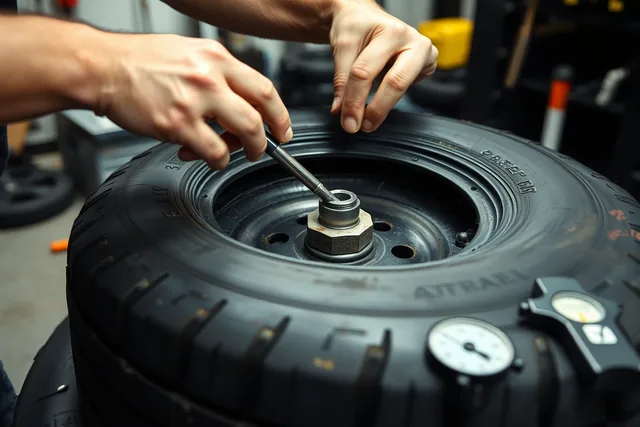
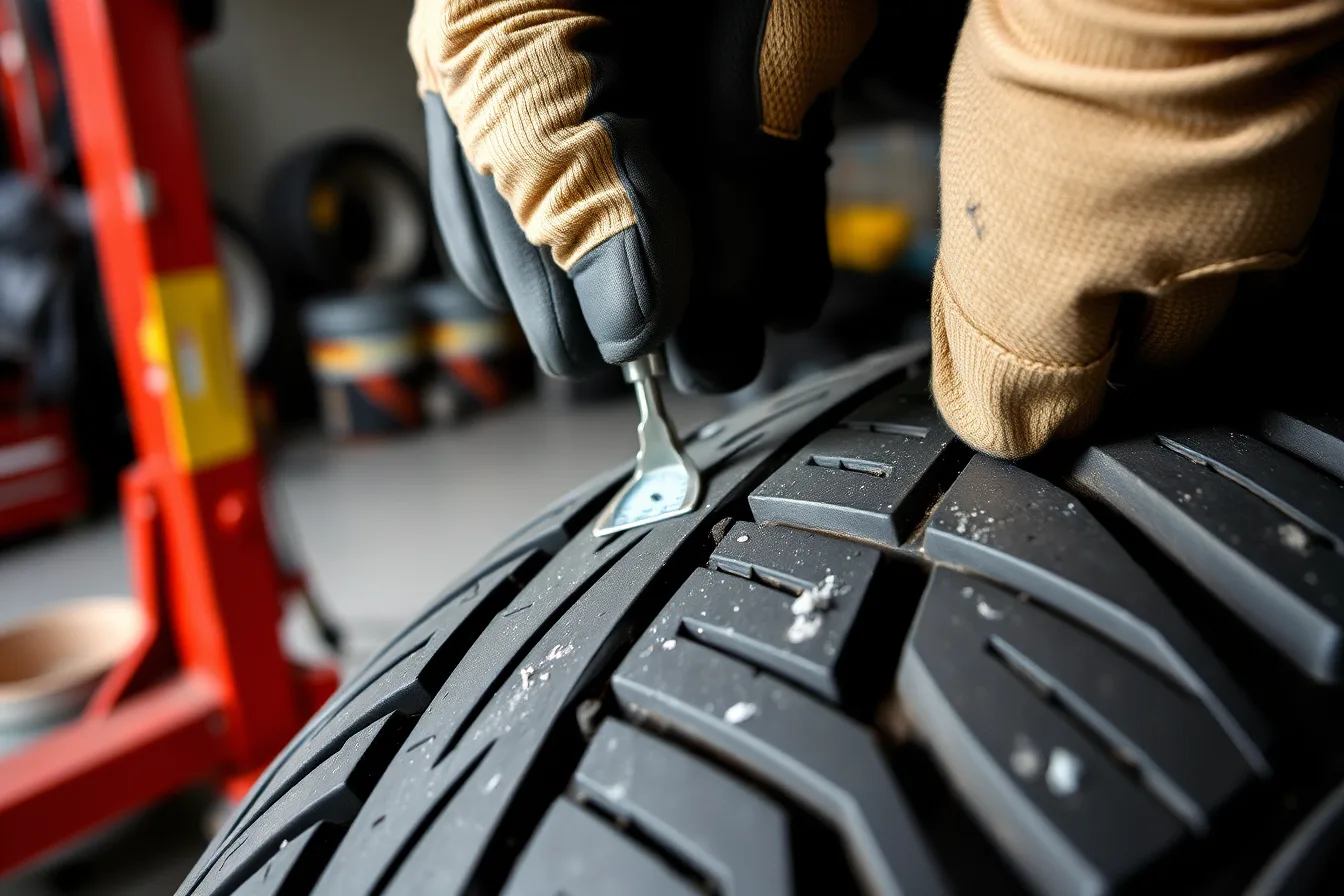
Measure depth in three places across each tire: both shoulders and the center. Inner edge wear points to camber or toe, and alignment effects on inner edge and feathered wear covers the geometry behind it. Record the numbers.
A shop that writes depth on the invoice builds a history the customer can see at the next visit. That record also feeds your reorder timing, which matters if your stock planning when the nearest warehouse is far already stretches lead times.
Annual depth record
Annual service is when you catch the slow failures.
| Depth check | What the number tells you |
|---|---|
| Depth at all four corners | Uneven wear points to alignment or rotation gaps |
| Depth against last visit's record | Shows the wear rate per 1,000 miles |
| Depth at both shoulders and center | Separates inflation wear from alignment wear |
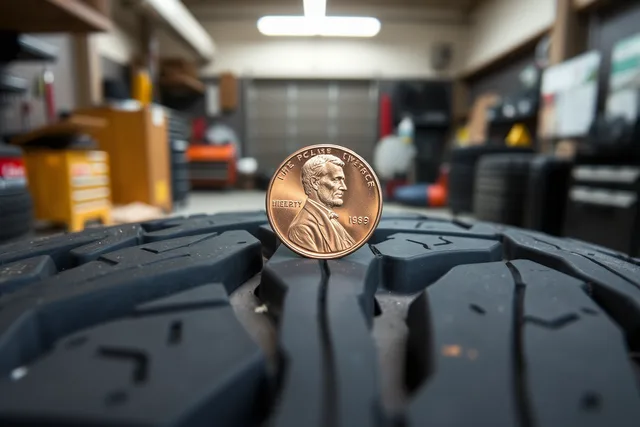
A tire that passes the penny test can still fail a panic stop on wet pavement. Depth is a floor, not a guarantee.
If your team is new to this routine, a training plan for a new tire shop employee gives you a sequence for teaching measurement before anyone touches a torque wrench.
Depth and age at replacement time
The multi-year interval is about replacement cycles and records, not weekly tasks.
Keep the date codes you install. When a customer returns three years later asking whether the tires are still good, the answer should come from your file, not from memory. Compare the depth record from each year against the date code.
Signs it needs attention now
Symptom to cause, so your writers can explain urgency without drama.
- Vibration at 50 to 70 mphbalance or a shifted belt.
- Pull to one sidealignment or a radial pull.
- Feathering across the treadtoe setting.
- Cupping in a repeating patternworn shocks or balance.
- Center wear onlychronic overinflation.
- Both shoulders wornchronic underinflation.
Tread wear patterns and their causes are catalogued well, and common tread wear patterns and their causes is a useful reference to keep at the counter.
The first thing that fails from neglect is pressure. Nobody checks it weekly, it drops in cold weather, and it drives every other wear pattern on this list. Depth is what customers see. Pressure is what causes the depth to disappear.