Guides
How to Measure Tire Tread Depth with a Penny (and When Not To)
How to measure tire tread depth with a penny: the shop sequence, the pass/fail limit, and the 2/32 inch threshold that decides replacement or a professional handoff.
What to take away
- Use the penny test as a quick pass/fail check at about 2/32 inch, not as an exact measurement.
- Measure with a tread depth gauge at the shallowest groove whenever the penny result is mixed or a state inspection threshold matters.
- The federal replacement line is 2/32 inch, but confirm the state inspection standard for the vehicle you are checking.
- Record the lowest reading and the tire position on the work order every time.
- Stop and hand the vehicle to a tire professional when any groove reads 2/32 inch or less or you see exposed cord, sidewall cuts, or a mechanical wear pattern.
What has to be true before the first measurement
Set the parking brake and chock a wheel before you put your hand into the tread. The tire should be clean, dry, and near ambient temperature. Heat can change the rubber just enough to distort the shallow measurement. A technician who has completed tire shop staff training will already know the shop's minimum tread policy. That policy should sit beside the federal limit and the state inspection rule.
The sequence for a penny check and a gauge check
Run the penny check first because it is fast, then confirm any doubtful groove with a gauge.
Penny check and gauge check
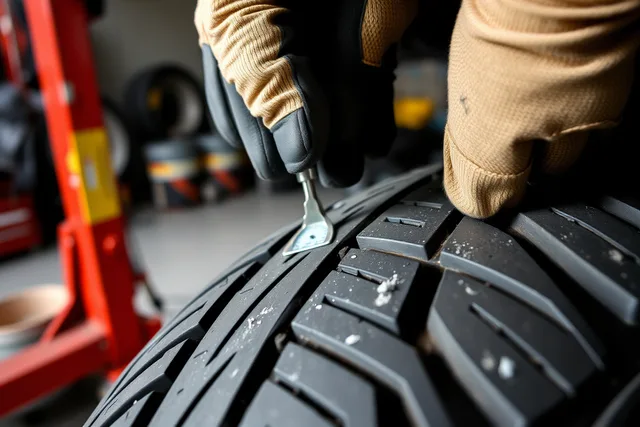
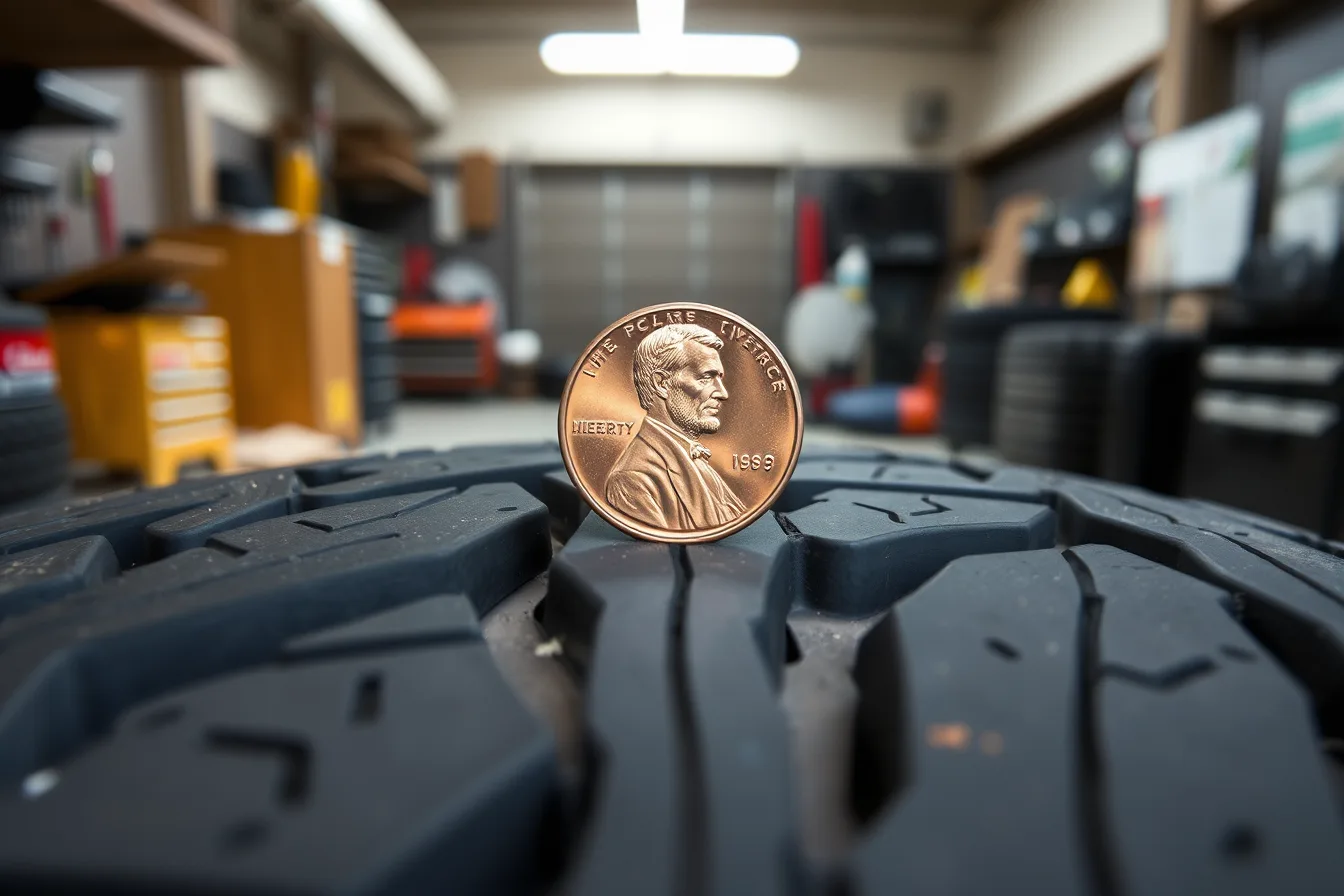
- Place a penny into a groove near the center of the tread with Lincoln's head pointing down toward the tire.
- Look at the space between the top of his head and the surrounding tread.
- If the tread reaches the top of Lincoln's head or above, the groove is at least 2/32 inch deep.
- If any part of the head stays visible, measure that exact groove with a tread depth gauge.
- Repeat the check in the inner, center, and outer grooves at two or three points around the tire.
- Write down the lowest reading, not an average.
The penny test works because the distance from the top of Lincoln's head to the edge of the coin is about 2/32 inch. It does not tell you 4/32, 6/32, or 8/32. Use a gauge for those finer readings when the customer asks, when the state inspection form requires an exact number, or when the tread looks uneven.
The step that decides the result
The step that decides the result is the gauge reading at the shallowest groove. Federal guidance from NHTSA states that tires with tread depth of 2/32 inch or less must be replaced and cannot be repaired.
State inspection programs commonly reference 2/32 inch, but the exact rule can vary by vehicle type and state, so confirm the threshold your state uses before you pass or fail a tire. This is why a shop should not rely only on the penny test: the penny is a quick gate, but the gauge is what matches a legal threshold.
How to check each step came out right
- Lincoln's head is not visible in the center groove after repeating the penny check at three points.
- A second gauge reading in the same groove matches the first within 1/32 inch.
- The work order shows the lowest reading and the tire position, not a rounded average.
A daily spot check against the shop's measurement process mirrors how owners check the work. When two technicians get different readings on the same tire, the difference usually comes from measuring a different groove or not pushing the gauge probe all the way down.
What to do when a step goes wrong
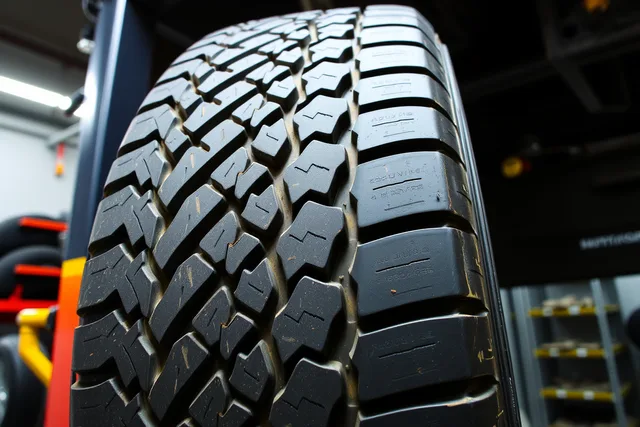
The common failure is a mixed penny result: Lincoln's head disappears in the center groove but stays visible at the inner edge. Recovery is to measure the shallowest groove with a gauge and inspect the tire for inner edge wear, cupping, or feathering.
A mixed result often points to inner edge wear, cupping, or feathering, which are described in the tire tread reference along with their typical causes such as misalignment and improper inflation.
When to stop and hand it to a professional
Stop measuring and hand the vehicle to a tire professional when any groove reads 2/32 inch or less, when you see exposed cord or sidewall cuts, or when the wear pattern points to suspension trouble. A tire at or below the federal limit is not a candidate for a patch or a service recheck; it needs replacement.
When the shop replaces the tire, the stock planning at tire shops process helps the counter staff pick the right replacement from inventory without overselling.
Clear advice about the 2/32 inch line also becomes part of tire shop owners referrals. The customer remembers that the shop stopped the inspection and explained the threshold instead of leaving a vague note.