Guides
Tire Tread Repair vs Replace: A Shop Owner’s Decision Guide
Tire tread repair vs replace turns on nail location, injury count and remaining depth. This guide gives shops a defensible checklist built on US repair limits.
What to take away
- A repairable puncture sits in the tread crown, is no wider than 1/4 inch, and the tire still has at least 2/32 inch of tread. NHTSA says tires at 2/32 inch or less must be replaced and cannot be repaired.
- Sidewall, shoulder and bead injuries are replace, full stop. So are tires with two repairs in the same half, run-flat damage, or any sign of internal separation.
- The repair itself is a patch and plug combination from the inside, not a plug pushed in from outside. Outside-in plugs are a comeback waiting to happen.
- A repair costs a shop far less in labour than a replacement sale, but a bad repair costs a liability claim and a lost fleet account. The decision rule has to be defensible on paper.
- State inspection rules vary, so the shop checklist below is the floor, not the ceiling.
What is being compared
The choice is not really repair against replacement. It is three outcomes a technician can hand back to a customer: a permanent repair, a replacement sale, or a refusal to touch the tire at all. Each has a place, and each has a customer who will argue for it.
A shop that only offers replacement looks like an upseller. A shop that repairs everything looks careless. The defensible middle is a written rule that names the injury, measures the tread, and stops there.
The Tire Industry Association publishes a repair standard that many US shops adopt as their own policy. It is not federal law, but it is the reference an insurer or a plaintiff's expert will reach for after a failure.
The criteria that matter
Five criteria decide almost every case a bay sees.
Repair if
- Injury location
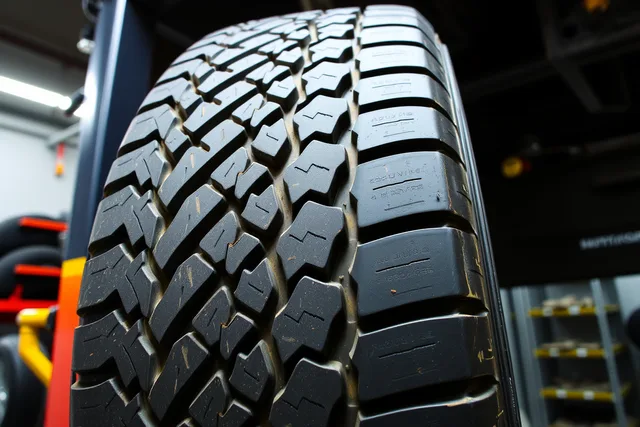
- Tread crown, between the shoulders
- Injury size
- 1/4 inch or smaller
- Number of injuries
- One, or two separated by more than half the tread width
- Remaining tread depth
- Above 2/32 inch
- Internal condition
- No separation, no run-flat damage, no heat discoloration
Replace if
- Injury location
- Sidewall, shoulder, bead, or inner liner
- Injury size
- Larger than 1/4 inch
- Number of injuries
- Two within the same half, or any prior patch nearby
- Remaining tread depth
- 2/32 inch or less
- Internal condition
- Any of those present
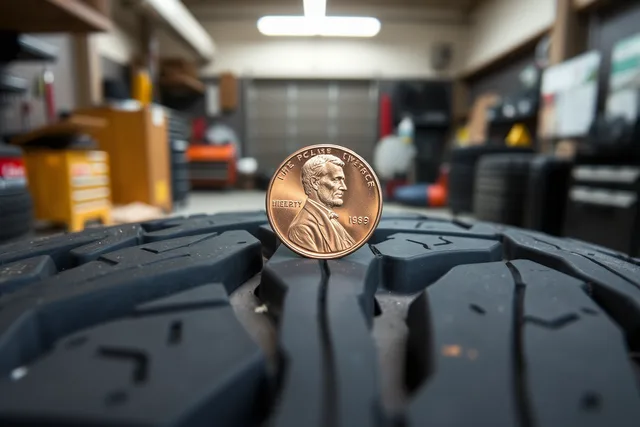
Tread depth is the criterion customers argue about most, because it is the one they can see. A gauge reading settles it in seconds. Our guide to measuring tread depth with a penny covers the roadside version and its limits.
Option by option
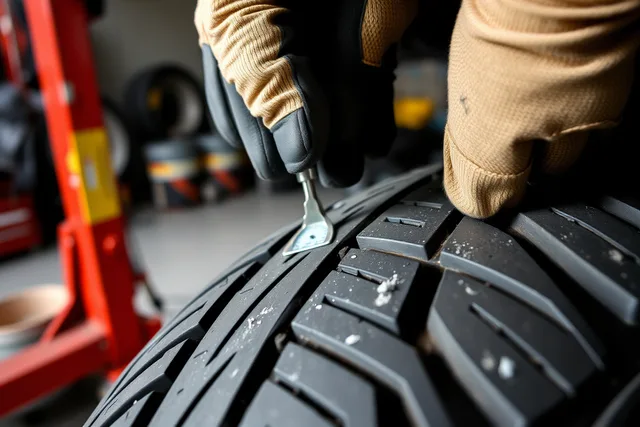
Permanent repair. The technician demounts the tire, inspects the inside, reams the injury, and installs a combination patch plug. The tire goes back into service with its speed rating intact in most cases. This is the right answer for a single clean nail hole in the crown of a tire with 5/32 inch or more of tread.
Replacement. The tire comes off and a new one goes on. This is the right answer when the injury sits in the sidewall, when a run-flat has been driven flat, or when the tread is at or below 2/32 inch. Federal rules on tire condition and replacement are summarised in NHTSA's tire equipment guidance.
Refusal. Sometimes the honest answer is that the shop will not repair and will not sell a single tire, because the axle needs a pair. Mismatched tread depth across an axle causes handling complaints and uneven wear. The tread wear patterns guide explains how inner edge and cupping complaints trace back to alignment and inflation rather than the puncture.
Where each one wins
Repair wins on cost, on customer trust, and on the environmental ledger. A repaired tire stays out of the scrap stream, which matters given how much of the waste stream scrap tires represent, as tire recycling describes.
Replacement wins on liability and on ride quality. A tire that has run flat has a damaged inner liner that no patch will fix, even if the outside looks fine.
Refusal wins when the customer's real problem is the other three tires. A shop that names that out loud keeps the account.
- Injury located and photographed before any work starts
- Tread depth measured at three points and written on the ticket
- Inside of the tire inspected after demount
- Repair method recorded as patch-plug, not plug only
- Customer told in writing why the answer was yes or no
What none of them solve
No repair, replacement or refusal fixes a wheel that is out of balance or an axle that is out of alignment. Those faults chew through new tires at the same rate as old ones. A shop that repairs a tire and sends the car out with a bent rim will see the customer again in a month, angry.
A second shared limit is the paper trail. None of the three options protects a shop unless the inspection is documented. A short written checklist, signed by the technician, is the difference between a policy and a guess. The same discipline shows up in quality control checks owners run on finished work.