Guides
Tire Tread Wear Patterns: What Causes Inner Edge, Cupping, and Feathering?
Tire tread wear patterns causes include camber, toe, and worn suspension. A US shop matches inner edge, cupping, and feathering to the failed part before inspection.
What to take away
- Inner edge wear usually means excess negative camber or worn control arm bushings, not just low air pressure.
- Tire tread cupping is a bounce pattern from weak shocks or struts, and it rarely improves with balancing alone.
- Feathering creates a sharp edge on each tread block when toe is out of spec, often after impact or worn tie rod ends.
- Uneven tire wear that reaches the inner edge below 2/32 inch will fail a state safety inspection and force replacement.
- A shop can identify tire tread wear patterns causes by checking the tire, then the suspension and alignment angles.
A driver returns after 5,000 miles with the inside edge of both front tires worn smooth, while the center tread still shows 7/32 inch.
The costly one
Situation: A shop sees inner edge tire wear on the right front and assumes the tire was underinflated. The driver keeps pressure at 35 psi, yet the shoulder keeps losing rubber. The real cause is negative camber from a bent strut or worn control arm bushing.
Wear Pattern to Fix
Wear pattern
- Inner edge wear
- Negative camber
- Tire tread cupping
- Worn shocks or struts
- Feathering
- Toe out of spec
Primary cause
- Inner edge wear
- Control arm, strut
- Tire tread cupping
- Shock absorber, strut mount
- Feathering
- Tie rod end, steering rack
Component to inspect
- Inner edge wear
- Alignment, bushing replacement
- Tire tread cupping
- Replace shocks in pairs
- Feathering
- Set toe, replace worn end
Typical shop fix
- Inner edge wear
- Tire tread cupping
- Feathering
Consequence: the tire must be replaced because the inside edge is below the legal limit. NHTSA tire safety guidance states that 2/32 inch or less is worn out and cannot be repaired. Prevention: measure camber and inspect the lower control arm bushing before mounting new rubber.
| Wear pattern | Primary cause | Component to inspect | Typical shop fix |
|---|---|---|---|
| Inner edge wear | Negative camber, worn bushings | Control arm, strut | Alignment, bushing replacement |
| Tire tread cupping | Worn shocks or struts | Shock absorber, strut mount | Replace shocks in pairs, then balance |
| Feathering | Toe out of spec | Tie rod end, steering rack | Set toe, replace worn end |
A checklist for tire shop staff training includes recording all four tread depths, which catches inner edge loss before the shoulder goes below the legal limit.
The ones that look fine at first
Situation: A customer reports a thump at 55 mph. The tires show scalloped dips around the tread, a pattern known as tire tread cupping. The shop balances the wheels twice without checking suspension. Consequence: the vibration returns within two weeks, and the cupped tread cannot be smoothed out; the tire needs replacement. Prevention: bounce-test each corner. Worn shocks or struts let the tire hop, carving cups. Replace dampers in pairs before balancing. Wikipedia lists common tire tread wear patterns that include inner edge, cupping, and feathering.
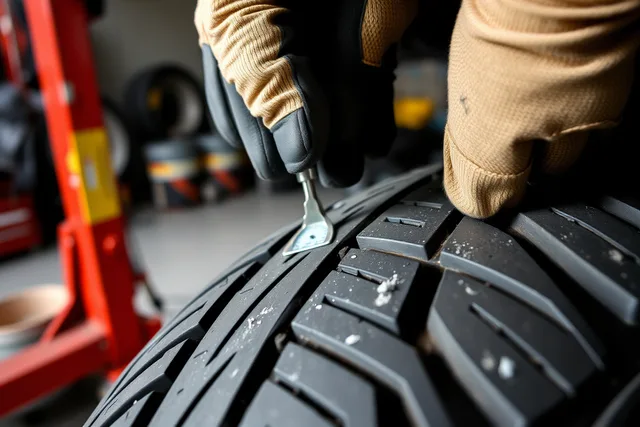
Feathering is a different fault: a tire shows sharp edges on one side of each tread block and smooth edges on the other, a sign of toe misalignment. The shop ignores it because tread depth is still above minimum.
Over several months, feathering makes the tires howl, and the inner or outer edge wears thin enough to fail inspection.
Prevention: set toe to the vehicle spec. Replace worn tie rod ends before they allow the wheel to point inward or outward.
A routine for how owners check the work should include running a hand across the tread after every alignment to feel for feathering.
The ones that only show up later
Situation: A rear tire carries a slight negative camber from a sagging spring. The outside edge looks full, the car tracks straight, and the driver never checks the inside edge. Over a six-month season, the inner edge wears below 2/32 inch while the outside edge still shows 6/32.
Hidden Inner Edge Wear
- 2/32 inchlegal wear limit
- 6/32 inchoutside edge still looks fine
- 4,000 milesinside tread can lose half
- 6 monthsseasonal check interval
Consequence: At the next tire rotation or state inspection, the hidden edge is flagged, and the tire must be replaced although the visible tread looks fine.
Prevention: Record depths at three points per tire, not just the outside, and compare camber readings from the last alignment. So a rear alignment check belongs on every seasonal service ticket.
A rear tire can lose half its inside tread in 4,000 miles without the driver seeing any change from the side of the car. The outside edge looks full, and the car still drives straight. By the next seasonal check, that hidden edge is below the 2/32 inch limit.
Using sample tire shop quotes for a rear alignment and tire pair helps customers see why the hidden edge drives the replacement, not the visible one.
What they have in common
All three tire tread wear patterns causes share one trait: the tire stays running long after the first sign appears because drivers and shops sometimes check only the side they can see. Inner edge wear hides on the shoulder, cupping hides in the tread valleys, and feathering hides in the block edges until the tire gets loud.
Shops that explain these patterns before selling tires build trust. A customer who understands why an alignment or shock replacement is needed will return for the next set. That trust supports tire shop owners referrals, which grow when the shop stops a repeat wear problem instead of only selling another tire.