Guides
Tire Tread Stock Inventory: How Many Tires Should a Shop Keep per Bay?
Tire tread stock inventory per bay: US urban shops often hold 12 to 18 tires per bay because storage is tight. Learn the workable limits and when to change plan.
What to take away
- For most US urban shops, plan on 12 to 18 passenger tires per bay for same-day work.
- The hard limit is storage80 to 150 square feet per bay is common, not enough for a full size matrix.
- Keep top eight sizes in stock and use distributor next-morning delivery for the rest.
- Stop relying on shallow stock when lost jobs hit three per bay per week for two straight weeks.
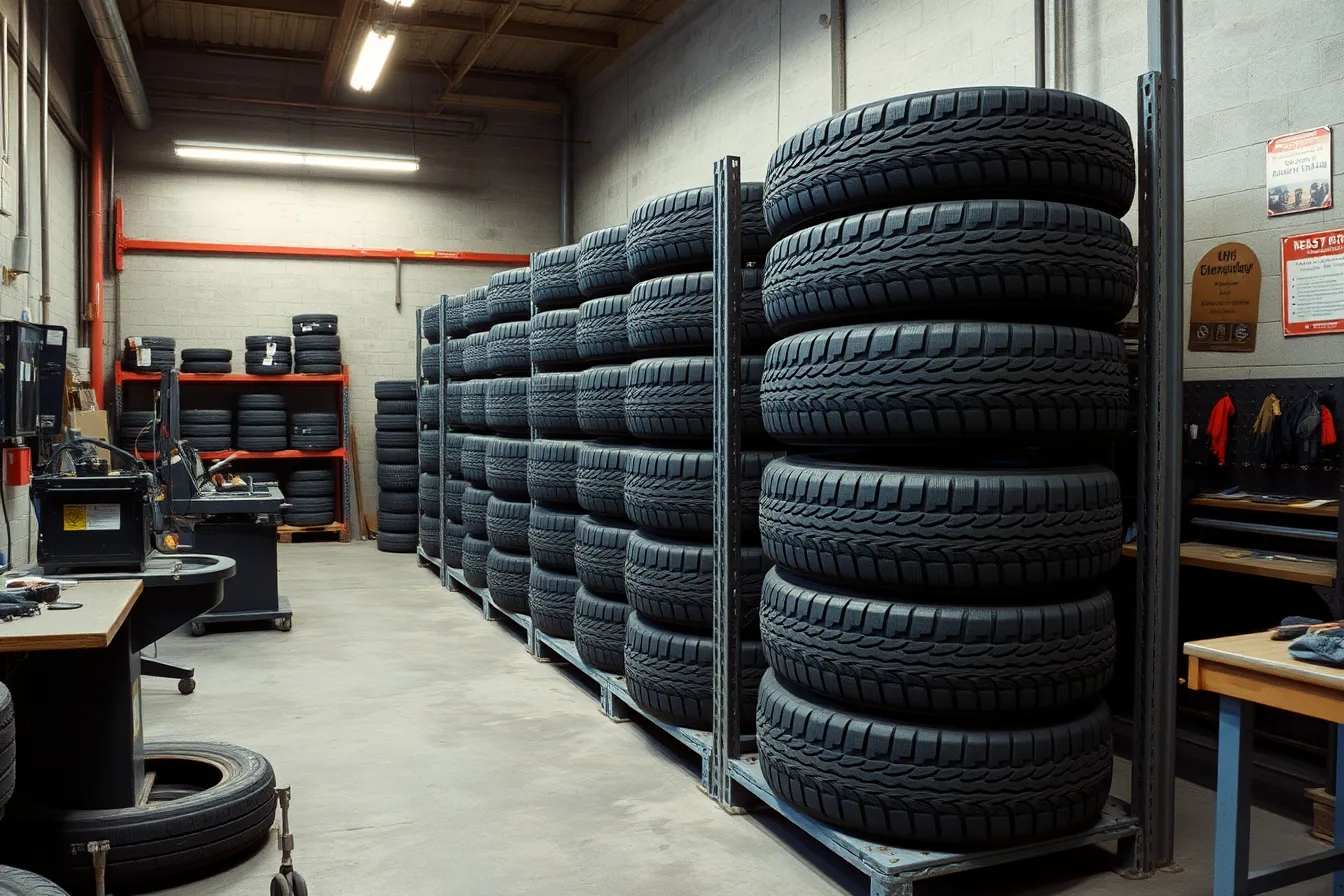
A tire bay can hold two lifts, a balancer, and a small rack. That leaves little room for a deep inventory. Many independent shops in Chicago, Los Angeles, or Houston operate with 80 to 150 square feet of storage per bay. A full size matrix for passenger tires would need four times that space.
The measurable storage constraint
Stacked unmounted passenger tires in 205/55R16 take about 1.5 cubic feet each. A 100 square foot storage area with 8 foot ceilings holds roughly 800 cubic feet, but aisles and access eat half of it. After space for mounting racks, you can fit 40 to 60 unmounted passenger tires. That limits you to two or three lines in top sizes.
A range covering 16 to 20 inch wheels in all widths, aspect ratios, speed ratings, and brands runs to hundreds of SKUs, so a one-bay shop cannot stock a full seasonal matrix.
Carrying every all-season size, winter line, and all-terrain line is ruled out. Shops over 500 km from a hub face a different planning problem. prairie tire shops plan stock for remote delivery with even less distributor support.
What the constraint removes
Shallow storage removes the option to stock every common replacement size. It also removes bulk purchase discounts, because you cannot take delivery of 200 tires when only 50 fit. It removes year-round winter tire depth in warmer states. You keep that space for all-season and all-weather tires. It removes the ability to say yes to every walk-in without a wait.
What still works with shallow stock
A lean rack still covers most same-day demand. Data from point-of-sale systems in US tire shops show that eight sizes usually cover 60 to 70 percent of passenger tire tickets. Those sizes include 205/55R16, 215/55R17, 225/65R17, and 235/45R18. Keeping one full set and three singles in each of those eight sizes per bay gives you a workable buffer. The rest can come from a distributor's same-day or next-morning route.
NHTSA states that tires at 2/32 inch tread depth must be replaced, so same-day replacement demand is real.
Stock depth per bay: a working guide
Stock depth per bay
Passenger tires held
- 80 to 120 sq ft
- 12 to 14
- 120 to 180 sq ft
- 16 to 20
- 180 to 240 sq ft
- 24 to 30
Top sizes covered
- 80 to 120 sq ft
- 6
- 120 to 180 sq ft
- 8 to 10
- 180 to 240 sq ft
- 12
Honest limit
- 80 to 120 sq ft
- No winter range
- 120 to 180 sq ft
- One winter line in narrow sizes
- 180 to 240 sq ft
- Two lines but no all-terrain
Set your starting stock per bay
- Pull 90 days of tire sales by size, speed rating, and season from your point-of-sale system.
- Rank sizes by unit count and by same-day requests.
- Keep one full set plus three singles for each size in the top eight sizes.
- Reorder any size when inventory falls below two singles.
- Review ranks after each season and after any promotion.
This method keeps your rack tied to actual demand, not a catalog wish list. If your shop also handles Canadian supply, Sourcing tires in Canada explains distributor differences.
The compromises worth making
Regular tire maintenance, including rotation and pressure checks, flattens replacement spikes. See tire maintenance guidance for the basics. Keep the top eight sizes deep and let the next twenty sizes ride on distributor inventory. Place daily orders at 2 p.m. for next-morning delivery. Train service writers to quote those stocked sizes first, but do not refuse special orders. Accept a lower gross margin on special-order tires because you save carrying cost and aging risk. In northern states, run a narrow winter program: one branded line in the four most common snow tire sizes per bay.
Tire tread wear patterns can tell you which sizes will move through service next month. That helps you adjust the rack before demand shifts.
The compromises that are not worth it
Do not stack tires more than three high to gain space. Sidewall distortion and bead damage from excessive weight create unsafe installations. Do not keep budget tires in many sizes instead of two reliable lines. That raises the chance of tread separation complaints and warranty arguments. Do not hold tires older than four years from the date code on the rack, because rubber compounds age even in storage.
When to stop and do it properly
The workaround stops being worth it when lost jobs become predictable. Count same-day jobs you turn away because the size is not on the shelf. If a shop loses three jobs per bay in a week and repeats that for two straight weeks, the shallow stock is costing too much. At that point, a small off-site storage unit or a wider distributor stocking program becomes the better choice. Add 100 square feet of rented storage or become a stocking dealer for one full-line brand. Also stop the workaround if your fill rate from special orders drops below 70 percent across a month. That means you quote too many tires you cannot deliver the same week.
Before you add a new line, Measure Tire Tread Depth on the returned cores. That tells you which sizes actually wear out in your market.