Guides
What a tire shop needs to operate legally for owner-operators
A repair refusal policy and a fitment and recall procedure are the two documents a tire shop needs in writing before it opens its doors to owner-operators.
What to take away
- In the United States the state sets licensinga business license, a sales tax permit and, in several states, a tire dealer or scrap tire registration.
- Two written policies carry the legal weighta repair refusal policy and a fitment and recall procedure.
- Waste tires bring storage limits, a manifest for every pickup, and any per-tire fee shown on the invoice.
- OSHA hazards, ADA access and Department of Labor pay rules apply from day one.
- Canada runs on provincial rules and sits in its own section below.
Licenses and registrations, by name
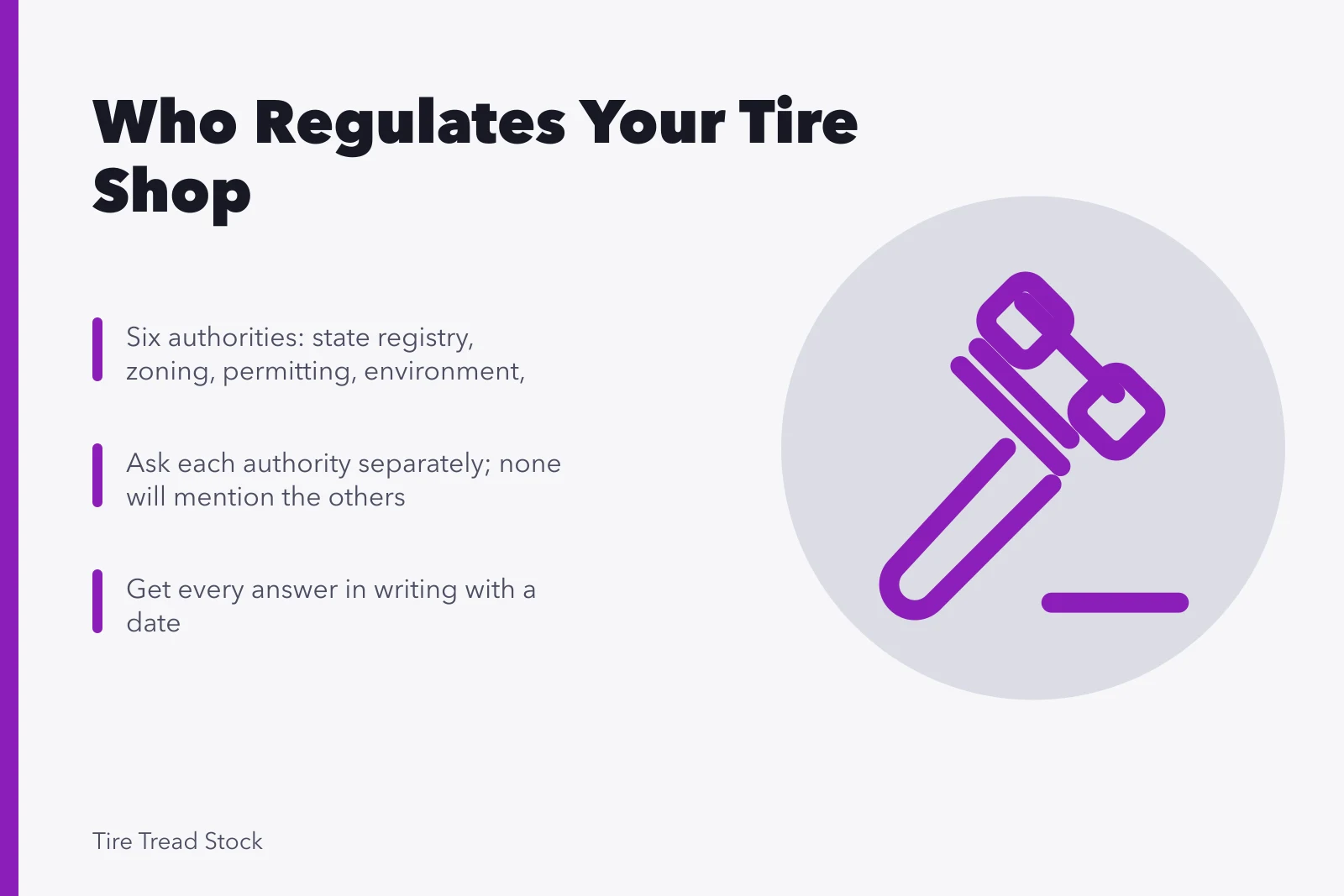
A US tire shop needs a state business license and a sales tax permit before it sells its first tire. Federal law covers the product, not the storefront.
States diverge past that baseline. Some register tire dealers, others the waste side, and a few do both.
| State | What it adds | Agency |
|---|---|---|
| California | Tire dealer registration, plus a per-tire fee on new tires | CalRecycle |
| Texas | Transporter and storage site registration, plus manifests | TCEQ |
| Ohio | Scrap tire transporter registration | Ohio EPA |
| Florida | Waste tire site and collector registration | Florida DEP |
Zoning comes first, and it decides whether an address works at all. The lease risks that trip up new owners are set out in the startup and market guide.
The repair refusal policy
The policy answers one question. When does this shop decline to repair? Build it from the tire maker's published repair limits, not from a technician's read of the damage.
Four checks cover it.
- Where the damage sits. Sidewall and shoulder damage fall outside most published repair zones.
- How the tire was run. A tire run flat can hold internal damage a visual inspection misses.
- How big the injury is. Punctures past the maker's stated limit are not repairable.
- The tire's history. A prior repair, a plug or bead damage fails the check.
Four checks before refusing a repair
- Damage locationsidewall or shoulder
- How it was runflat or underinflated
- Injury sizebeyond manufacturer's limit
- Historyprevious repair, plug, bead damage
Keep it to one laminated page at the balancer, not a binder in the office.
Refusals need a record. The customer signs a form giving the reason, the date and the technician's name.
A refusal is not a lost sale. Offer a replacement and a specific reason. Which jobs deserve menu space is the exercise in the services and packages guide.
The fitment and recall procedure
It covers everything between the customer's approval and the tire leaving the bay.
- Load index and speed rating. The replacement must meet or exceed the original equipment. A lower rating cuts capacity or heat tolerance.
- DOT date code. Four digits, week then year. A tire older than six years should not be sold as new stock.
- Registration. Every tire sold is registered to the customer, so a recall notice reaches a person.
- Recall response. When a notice arrives, check the records, contact affected customers and document that contact.
Read the current federal material on NHTSA's tire safety pages, then write down what the shop does when a notice arrives.
One procedure that lives in the owner's head fails the first day the owner takes off. The balancer, the inflation cage and the lift behind it are equipment decisions, covered in the equipment and setup guide.
Waste tire storage and manifests
Every casing off a rim needs a legal destination, and that creates three duties.
Storage. Most states set a count where casual stacking becomes a regulated pile, commonly between 100 and 500 tires on site.
Manifests. A pickup without paperwork leaves the shop holding the liability. A workable manifest carries several fields:
Date, tire count, hauler registration number, destination facility, and the signature of whoever releases the load. Keep the shop copy.
Waste tire duties for new owners
- Storage within provincial quantity limit
- Hauler pickups with required manifests
- Invoice disclosure of required fees
- One person remits the fee
Fees. Where a state charges one, the amount goes on the invoice as its own named line. Confirm the current rate with the state agency.
Safety, access and employment duties
Hazards in a tire bay are specific and knowable. OSHA's overview of hazards in automotive repair and refinishing names the categories, from solvents and dusts to noise, lifting equipment and slippery floors.
A waiting area and a parking lot usually make the shop a place of public accommodation, so entrances, counters and restrooms must be reachable.
Employment adds pay, hours, classification and postings. The Department of Labor's resources for small businesses is the federal starting point.
Filing the answers, in order
Work these in sequence. Each step produces a document for the same file.
- Confirm zoning and waste storage rules for the address before signing a lease.
- Register the business and the sales tax account with the state.
- Check whether the state requires a tire dealer or scrap tire registration.
- Ask the state environmental agency for the storage limit and the manifest format, in writing.
- Set up employment compliance before the first hire, which the hiring process that works for a tire shop covers in detail.
- Write the refusal policy and the fitment procedure, and date the file for review.
Keep every answer with the date and the office that gave it. That file is worth more than any checklist, because it fits your address.
Canada as a second market
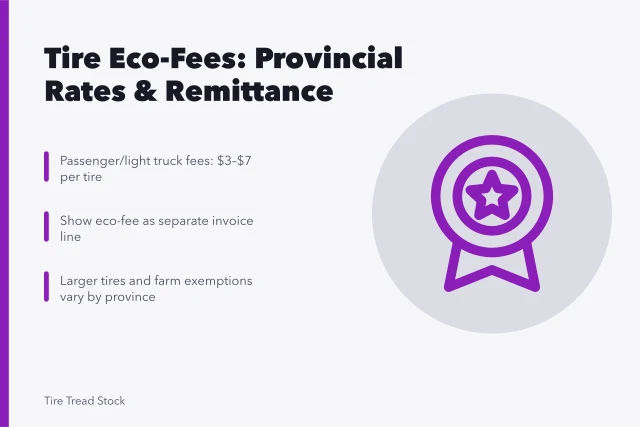
Canadian shops face a different split. Transport Canada and CSA standards apply to the tires, but licensing, waste rules and fees come from the province. Alberta's tire recycling fee is the best-known example, charged per new tire and shown on the invoice.
GST/HST registration runs through the Canada Revenue Agency. Layer the province on top of the baseline above.