Guides
The local search checklist for a tire shop owners
Local search for a tire shop: what the ranking actually weighs, the listing fields that matter, seasonal hours, and the review rules you cannot break.
What to take away
- Local search is where urgent tire demand lands. Somebody with a flat is searching nearby, right now, and picking from what appears.
- Distance is not something you can optimize. Relevance and prominence are, and that is where the work goes.
- The listing fields most shops neglect are hours, services and photographs, and all three are visible to a searcher deciding between you and the next shop.
- Reviews carry weight and are the one area with hard rules. No payment, no incentives, no filtering, nothing written on a customer's behalf.
- Search brings the call. The call is still lost or won at your counter.
What the ranking actually considers
Google's own documentation on improving a business profile's local ranking describes three factors: relevance, distance and prominence. That is the authoritative statement on how its own product behaves, and it is worth reading rather than paraphrasing from a blog.
The practical reading for a tire shop:
- Distanceis fixed by your address. You cannot change it and you should not try to fake it.
- Relevanceis how well your listing matches what was searched, which is something you control by describing what you actually do, accurately and completely.
- Prominencereflects how well known the business is, including information from across the web. Reviews and consistent information contribute.
So the work is: describe the shop accurately, keep it current, and earn a genuine reputation. There is no fourth lever, and offers to sell you one should be treated accordingly.
The listing fields that matter, in order
- Name, address and phone, consistent everywhere.The same form on your listing, your website, your invoices and any directory. Inconsistency is the most common self-inflicted problem.
- Hours, including seasonal changes.A shop that extends hours for changeover weeks and does not update the listing sends customers to a closed door. Update holiday hours too.
- Categories.Choose the ones that describe what you are, not everything you could plausibly claim.
- Services.List the actual work: fitment, balancing, rotation, repair assessment, seasonal changeover, storage, sensor service, alignment if you do it. This is the field that carries relevance and it is the one most often left half filled.
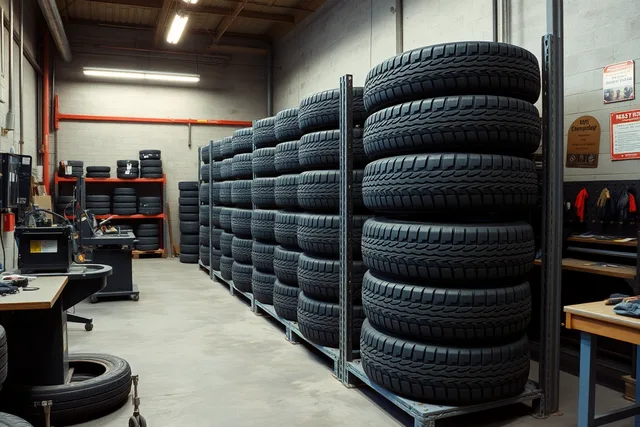
- Photographs of the real shop.The bays, the counter, the frontage, the turn-in from the road. Stock imagery tells a searcher nothing and looks like a shop nobody has visited.
- Description.Plain language about what you do and who you serve, written once and kept accurate.
- Booking or contact route.Whatever a customer will actually use, and something that reaches a person during the busiest hour.
What a searcher is deciding in ten seconds
The technical side is only half of it. Somebody with a flat tire is comparing three listings and choosing on visible signals.
- Is it open now?
- Is it close?
- Does it look like a real shop, from the photographs?
- Do the reviews sound like people describing this specific place?
- Can I reach a person?
Every one of those is under your control and none of them requires an agency.
Reviews, and the rules around them
Reviews contribute to how prominent a business appears and they are also what a human reader is actually judging. That combination makes the temptation obvious, so the rules are worth stating plainly.
Do not pay for reviews or offer a discount, entry, or anything else in exchange. Do not ask only customers you expect to be happy. Do not write reviews yourself or have staff write them, and do not suppress or gate negative ones.
The FTC's guidance for marketers on soliciting and paying for online reviews sets out what is expected, and it is not a gray area.
What works is duller and more durable: ask every customer at the same point in the same way, make it one link, respond to what comes back.
Reply to negative reviews after reading the job record, and fix the underlying thing. A pattern in your reviews is a pattern in your shop. No search work outruns a comeback problem.
Seasonal search behavior
Tire searching spikes. The first cold snap, the first hard rain after a dry spell, and the changeover weeks all produce sudden local demand, and it is served by whoever is visible and reachable at that moment.
Two things to do in advance.
- Update hours before the season changes, not during it. A listing showing last season's hours in the busiest week of the year is a self-inflicted wound.
- Make sure the phone is staffed during the spike. Search brought the call; an unanswered call sends it to the next shop in the list.
Beyond that, resist the urge to add seasonal keywords to your listing name or to stuff the description. It does not help and it can put the listing at risk.
What local search cannot do
It cannot make you closer than you are, it cannot create capacity, and it cannot repair a reputation. A shop that ranks well and cannot take the work converts search visibility into long waits and the reviews that follow.
Match visibility to what the bays can absorb, which means the operating flow in the operations and workflow guide has to hold before you push harder on demand. Capability limits what you can honestly list under services, and that follows from the machines described in the equipment and setup guide.
Measuring it
Ask every caller how they found you and record whether they booked. Compare that against what the listing reports about calls and direction requests. What you want is bookings, and a listing that produces many calls and few bookings is telling you the problem is at the counter rather than in the search result.
The wider channel picture and the seasonal marketing calendar this fits into are in the marketing and growth guide. Claims in a listing are still claims.
Local rules that govern them are mapped in the licensing and compliance guide. Whether your radius holds enough demand to be worth competing for is the trade-area question developed in the market and expansion guide.
Common questions
Do I need to hire a local search agency?
Usually not for a single shop. The work is accurate information, real photographs, current hours and genuine reviews, and all of it is done better by someone who knows the business.
How long does it take to see a difference?
Listing accuracy helps immediately, because it affects whether a searcher calls. Prominence builds over months. Judge the two on different timescales.
Should I list services I could do but rarely offer?
No. It brings calls you have to refuse, which costs bay time at the counter and produces disappointed people. List what you actually do well.
What about multiple locations?
Each location needs its own listing with its own address, hours and phone, and each should be maintained separately. Copying one to the other is how two shops end up sharing one set of wrong hours.
Does responding to reviews help?
It helps the human reading them, which is what actually decides the call. Respond to the negative ones factually, after reading the job record, and without arguing.