Guides
The October to December tire rush in Winnipeg and how to staff it
Winnipeg's tire rush runs eight to ten weeks, squeezed by early snow and Manitoba overtime rules. Staff your shop in September, not November.
What to take away
- Winnipeg's rush runs eight to ten weeks, compressed by early snow and drivers who book the same week.
- Manitoba Employment Standards generally pays overtime above 40 hours a week and requires rest between shifts, so a 12-hour November is a payroll decision, not a staffing fix.
- Split the shop into intake, mount and balance, and torque and release. Two mount bays fed by a staging lane beat three bays with no queue discipline.
- Winter compound stiffens below about -15 C. Warm the day's sets indoors for two hours and never force a bead.
- Hire in September, train one station per week, and keep two or three workers into January.
Why the Winnipeg rush compresses into eight weeks
Winnipeg gets its first lasting snow in October most years. By November the overnight low sits below -10 C, and every driver who waited calls in the same week.
Manitoba has no provincial winter tire mandate, but public insurance and most fleet policies push drivers to fit winters before the snow stays. That concentrates demand harder than in Toronto or Vancouver, where the first snow arrives later and softer.
The shop's own costs climb at the same moment. A bay door opens and closes hundreds of times a day in November, and each cycle dumps heated air onto the apron. Owners who budget labour but not heat get a December surprise.
Cold changes the work itself. Rubber stiffens, beads resist seating, and a technician rushing a frozen tire can bend a rim or strain a wrist. The rush is a staffing problem and a handling problem at once.
For how the bays, counter and storage room fit together the rest of the year, see tire shop operations.
Manitoba hours, overtime and holidays through the rush
Manitoba Employment Standards sets the floor. Most employees reach overtime after 40 hours a week, paid at 1.5 times the regular wage. Scheduling 12-hour days through November and settling up later is a compliance problem, not a shortcut.
Rest rules bind too. Employees generally get at least eight hours off between shifts plus a longer weekly rest. A close-then-open pairing breaks that, whatever it does to morale.
Thanksgiving and Remembrance Day both land inside the rush. Eligible staff get holiday pay or a substitute day, so build those dates into the bay schedule in September rather than finding them on the calendar in November.
The province publishes Manitoba human resources guidance for employers covering hours, overtime and record keeping. Read it before you write the November rota.
Seasonal bonuses, overtime and temporary help all change source deductions. The province outlines the wider Manitoba business tax context for employers. Clean records make the January filing boring, which is the goal.
Safety duties run alongside employment law. The federal Canada Occupational Health and Safety Regulations apply to federally regulated operations, and provincial rules cover most Manitoba shops. Training and supervision duties for tire work are set out in this guide to occupational health and safety duties; the principles carry into a Winnipeg bay.
A three-stage bay flow that keeps the queue moving
A two-bay shop does not beat the rush by working faster. It beats the rush by separating tasks so no bay waits on a decision.
A three-stage bay flow
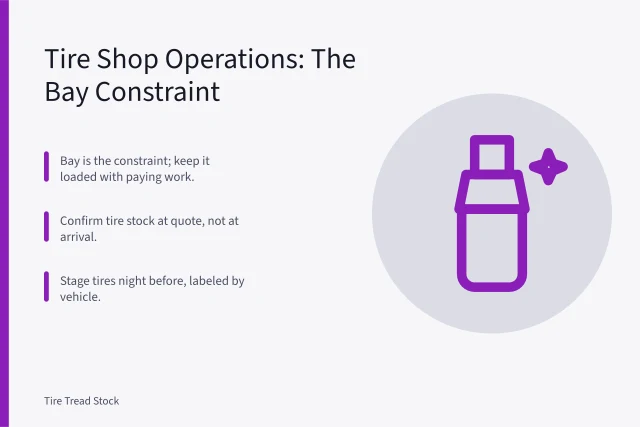
- Intakeone person checks the vehicle, confirms size, writes the work order and parks the car in a numbered lane.
- Mount and balancetwo bays run continuously, each with a dedicated technician and a pre-staged set of tires.
- Torque and releasea third person torques to the vehicle specification, checks pressure, logs the work and returns the keys.
That flow keeps the mount bays fed and stops a technician walking to the counter to answer the phone. For timing detail, see how to schedule tire shop jobs without gaps.
Book 30-minute blocks with 10 minutes of slack. Walk-ins go on a separate same-day list and wait, or take the next morning. Pre-stage the first ten sets the night before and stack them by bay; ten minutes saved per car is hours by Friday.
Keep one bay for the unexpected. A seized lug nut or a stripped stud will otherwise stall the whole line. That bay is not idle, it is insurance.
Cold-weather mounting, torque and storage
Winter compound stays flexible in cold, but it still stiffens below about -15 C. A tire that sat overnight in an unheated trailer is not ready to mount at 7 a.m.
Move the day's sets into the shop the night before, or into a heated staging area at least two hours ahead. A room-temperature tire seats a bead in seconds; a frozen one fights back.
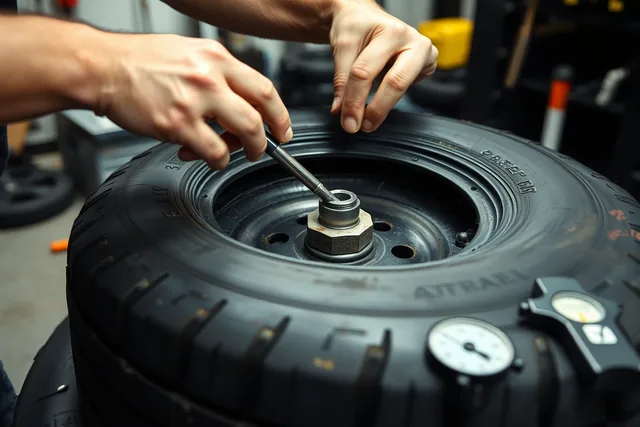
Never force a bead. If it will not seat at normal pressure, stop, warm the tire and retry. Forcing it can damage the bead, bend a rim or put a tool into a hand. Follow the tire manufacturer's published mounting and inflation specifications, and the relevant Transport Canada and CSA standards, rather than any number quoted secondhand.
Use proper tire mounting lubricant on both bead and rim flange. Soap dries and leaves residue that becomes a slow leak.
Torque by hand and re-check. Impact wrenches over-torque, and cold alloy is less forgiving. Set the torque wrench to the vehicle specification and have a second person verify the first ten cars of the day.
Storage is part of the service. Tag and bag every customer set and keep them above freezing. A shop storing 400 sets in a cold container spends March answering complaints.
Hiring and training seasonal staff
Start in September. The strongest seasonal applicants are placed by the first week of October, and the remainder are the ones who did not finish last season.
Write the ad around one task. "Tire changer, two-bay shop, November to January" draws better applicants than "general labourer." State the end date and whether it can extend.
Interview practically. Ask the applicant to describe the last cold rim they mounted, and listen for how they talk about torque. More on screening is in this guide to tire shop hiring.
Train one station per week: intake first, then mount and balance, then torque. Someone who learns everything in a day will be dangerous by November. Pair each new hire with a permanent technician for the first ten shifts, because correction in the moment beats a meeting after a mistake.
- Completed safety orientation and shop tour
- Demonstrated correct lifting and wheel handling
- Mounted and balanced five sets under supervision
- Used a torque wrench to specification on ten vehicles
- Logged work orders and storage tags correctly
- Passed a cold-start bead-seating drill
- Knows who to ask before forcing a stubborn bead
Equipment choices shape how fast a new hire becomes useful, and the tire shop equipment list is where that decision starts. One damaged rim costs about a day of a seasonal wage.
Pay, retention and the January decision
January brings repairs, storage returns and pothole damage, so the work does not stop when the snow does. Decide in December who stays.
Pay the seasonal crew correctly through the end. Overtime, holiday pay and any agreed bonus belong on the final paycheque. A shop that argues about a December bonus will not fill its September ads.
Keep two or three temporary workers on reduced hours. They know the bay layout and the torque routine, which makes them cheaper than a March hire.
Part well with the rest. Write a short reference and ask whether they want a call next September. Seasonal rehiring is the cheapest recruiting channel a Winnipeg shop has.
Compare your tire shop employee pay against what the market paid this season. If a good technician left in November, the wage was the reason.
Common questions
How early should a Winnipeg tire shop start hiring for the rush?
Early September. By the first week of October the strongest seasonal applicants have accepted offers, and the shop picks from the remainder. Starting late costs you the people who already know a bay.
Can a Manitoba shop run 10-hour days through November?
Within the hours and overtime rules, yes. Manitoba Employment Standards generally requires overtime above 40 hours a week and rest between shifts, so a compressed schedule needs planning and records. Confirm current details with the province.
What temperature is too cold to mount a tire?
Below about -15 C the rubber stiffens enough that beads resist seating. Warm the tire indoors for at least two hours before the appointment instead of forcing it on the machine, and follow the manufacturer's mounting specification.
How many bays does the rush need?
Two mount bays plus an intake lane and a release position will move more cars than three mount bays with no staging. The bottleneck is usually the queue, not the machine.