Guides
Should a tire shop buy new or used equipment for new owners
New or used tire shop equipment, decided by downtime cost rather than sticker price, with the variables to fill in and the machines never worth buying used.
What to take away
- The sticker difference is the smallest term in this decision. Downtime, parts availability and wheel damage risk are larger.
- Price the decision in lost bay hours. A machine that idles a bay for a week has already spent the saving.
- Some equipment is a reasonable used buy and some is not, and the split follows parts availability and what happens when it fails.
- Ask for maintenance history and the manufacturer's instructions. A machine arriving without either is more expensive than it looks.
- Installation and certification costs are the same whichever you buy, and they are routinely left out of the comparison.
The comparison people actually run, and why it is wrong
The usual version is purchase price of new against purchase price of used, with the difference treated as the saving. That comparison ignores the constraint. A tire shop sells bay minutes. Any hour the machine is not available is an hour of product you cannot make, and on a busy Saturday those hours are the expensive ones.
Run it as total cost over the period you expect to own the machine, in named variables you fill in from quotes rather than from anyone's averages.
The variables
- Pn, Pu
- = purchase price, new and used
- I
- = installation and certification, usually similar for both
- M
- = expected maintenance and wear parts per year
- A
- = parts availability, expressed as the lead time in days for the common wear item
- U
- = expected unplanned downtime days per year
- V
- = value of a lost bay day, which is your own contribution per bay hour times productive hours
- R
- = residual value at the end of the period
- W
- = wheel damage risk, expressed as the cost of one incident times how likely the machine makes it more probable
Total cost over N years is roughly P plus I plus N times M plus N times U times V, minus R, plus W. The two terms that decide most real cases are U times V and W, and both are usually left out.
Total cost variables
- Pn, Pupurchase price new and used
- Iinstallation and certification
- Mmaintenance and wear parts per year
- Aparts lead time in days
- Uunplanned downtime days per year
- Vvalue of a lost bay day
- Rresidual value at end
- Wwheel damage risk cost
Where the two options separate
New
- Downtime risk
- Lower and covered by warranty early on
- Parts lead time
- Current model, parts in the channel
- Wheel protection features
- Current generation
- Training and documentation
- Supplied
- Financing
- Usually available against the asset
- Residual
- Predictable decline
- Cash today
- Higher
Used
- Downtime risk
- Higher, and you carry it
- Parts lead time
- Depends entirely on model age
- Wheel protection features
- May predate the wheels you actually service
- Training and documentation
- Often missing, which affects maintenance
- Financing
- Harder, often cash
- Residual
- Already taken, so less further loss
- Cash today
- Lower, which sometimes is the whole argument
Which machines are reasonable used buys
Usually fine used, if serviceable: jacks and stands, wheel dollies, benches, racking, air lines and reels, hand tooling, service carts, waste handling equipment. These fail visibly, cost little to replace, and do not take a bay down.
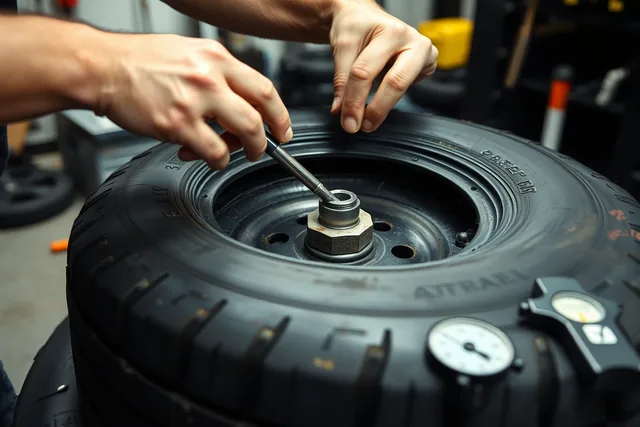
Judge case by case: balancers and tire changers. Both can be good used purchases when the model is recent enough that wear parts are still available and the wheel-protection features suit the wheels in your trade area. Both are bad purchases when they are old enough that the machine will mark an alloy, because one incident with a customer's wheel usually exceeds the saving.
Rarely worth it used: the lift, and anything with a calibration requirement you cannot verify. A lift is the machine the whole business runs on, its installation must meet the manufacturer's requirement for your slab, and a used unit without documented history is a risk you are taking on behalf of the person who works under it. Sensor tooling ages badly too, because coverage without an update path decays into a machine that cannot see recent vehicles.
The questions to ask before any used purchase
- Show me a full cycle on a wheel like the ones I service. Not a demonstration wheel.
- What is the maintenance history, and who did it?
- Are the manufacturer's operating and maintenance instructions included?
- Which wear parts are still available, from whom, and in how many days?
- What is the calibration procedure, and when was it last done?
- Why is it being sold? A shop closing and a shop replacing a problem are different answers.
- What does installation cost me, and does the manufacturer permit installation by whoever I would use?
If the answer to two or more is unclear, treat the price as higher than quoted, because you are buying the uncertainty as well as the machine.
Used purchase questions
- Show a full cycle on your wheel type
- What is the maintenance history and who did it
- Are operating and maintenance instructions included
- Which wear parts are available, from whom, in how many days
- What is the calibration procedure and last date
- Why is it being sold
- What does installation cost and who may install
The safety dimension that does not appear in a price
Used lifting equipment turns a cost decision into a safety decision.
A tire shop's hazards, lifting equipment included, appear in OSHA's overview of automotive repair and refinishing hazards. OSHA's material on running a safety and health program describes how a shop should handle them: find the hazard and fix it before an injury or an inspection does.
In practice that means any used lifting equipment needs its manufacturer's inspection schedule, a documented installation, and an inspection before first use. If you cannot get those, the purchase is not cheaper, it is unfinished.
The equipment also has to be able to do the work the vehicles require. Sizing, markings, aging and recall handling are set by the vehicle and tire manufacturers, with current federal material at NHTSA's tire safety pages, and some tooling capability follows from those specifications rather than from a feature sheet.
Working the decision through
Take one machine at a time and fill in the variables from real quotes. Most decisions resolve quickly once U times V is on the page, because a machine that costs you three bay days a year is rarely a bargain at any purchase price.
Two contexts change the answer. A shop with uncertain local demand has a stronger case for used equipment, because it buys the option to be wrong cheaply, as the market and expansion guide explains.
A shop still building its crew has a weaker case, because used machines demand more from the operator. The training side sits in the hiring and training guide.
Check the permitting angle before you commit. Some equipment carries an inspection or registration obligation where you operate, which is covered in the licensing and compliance guide. The buying order itself, and what each machine contributes, is in the equipment and setup guide, and the pre-purchase verification list is in the equipment checklist for new owners.
Common questions
Is used equipment a false economy?
Not as a category. It is a false economy for machines whose failure stops a bay, and a genuine saving for machines whose failure is an inconvenience. Sort your list by that question and most of it decides itself.
How do I value a lost bay day?
Multiply your own contribution per bay hour by the productive hours the bay runs. If you have not calculated contribution per bay hour yet, do that first, because this decision and several others depend on it.
Should I buy used to open, then replace?
That is a defensible plan for the machines in the middle category, and it works best when you have already identified what would trigger the replacement. A plan to upgrade "when we can" usually means never, and the old machine sets your quality ceiling in the meantime.
What about auction purchases?
You give up the inspection, the history and usually the instructions. That can still be right for benches, racking and hand tooling. It is rarely right for anything a customer's wheel touches or anything a person works beneath.
Does warranty matter much?
Early on, yes, because it converts unplanned downtime into somebody else's problem during the period when your shop can least afford a closed bay.