Guides
Serving bilingual and newcomer customers at tire shops in Quebec City
Quebec City tire shops serve francophone and newcomer customers under the Charter of the French Language, alongside Quebec's winter tire rules.
What to take away
- French must be markedly predominant on your commercial signage, and staff must be able to serve customers in French.
- Winter tires are mandatory on Quebec-registered passenger vehicles from December 1 to March 15, with limited exemptions set by the SAAQ.
- A written French script at the counter lets a technician who is not fluent sell a winter package without freezing.
- A licence is not needed to buy tire service, but a newcomer still has to register the vehicle in Quebec.
- Prices on your board exclude GST and QST; say so before the customer reaches the till.
Charter of the French Language at the tire counter
The Charter of the French Language governs your storefront, your interior signs and your price lists. Where another language appears, French must be markedly predominant. On a two-language sign, that means French lettering at roughly twice the size of the English.
Inside the shop the same duty covers the service menu, warranty documents and seasonal posters. A board reading "Winter Tire Special" beside "Pneus d'hiver" needs the French at twice the height. Your website and online booking page count as commercial advertising when they promote the business.
The Office québécois de la langue française enforces this and can issue fines. The operational cost is smaller than the fine: a customer who reads your sign in French walks in already trusting you.
Staff carry the same duty at the counter. A technician who cannot answer in French needs a route to someone who can, and that route should be obvious before the customer asks. Keep a phrase sheet taped by the till: pneu d'hiver, crevaison, équilibrage, pression des pneus, rendez-vous.
Language is one thread of daily bay work. Our tire shop operations guide covers the rest of the day.
A French script that sells winter packages
Most shops in Quebec City have staff whose French is strong on the phone and shaky on a technical explanation. A script fixes the second case. Write it on one laminated card and keep it at the counter.
Open with the greeting, then move straight to the question that starts the sale:
- "Bonjour, comment puis-je vous aider?"
- "Avez-vous déjà vos pneus d'hiver?"
- "Nous avons des pneus d'hiver pour votre véhicule. Voulez-vous un rendez-vous?"
For price, say the number in French and write it on paper. A written figure removes the risk that a misheard number becomes an argument at pickup.
Explain the law in one sentence: "La loi oblige les pneus d'hiver du 1er décembre au 15 mars." Then ask if there are questions. Run the script in the morning huddle twice a week; a technician who has said the words out loud will use them.
The equipment side of the same season, from balancers to torque wrenches, is covered in our tire shop equipment checklist.
Explaining the winter tire rule to a newcomer
A customer from a country without a snow season has no reason to know the rule exists. Say the dates plainly: winter tires are required on Quebec-registered passenger vehicles from December 1 to March 15. The Société de l'assurance automobile du Québec sets and enforces it.
Exemptions are narrow and specific, and they change. Do not paraphrase them from memory; open the winter tire regulations page at the counter and read the current wording with the customer.
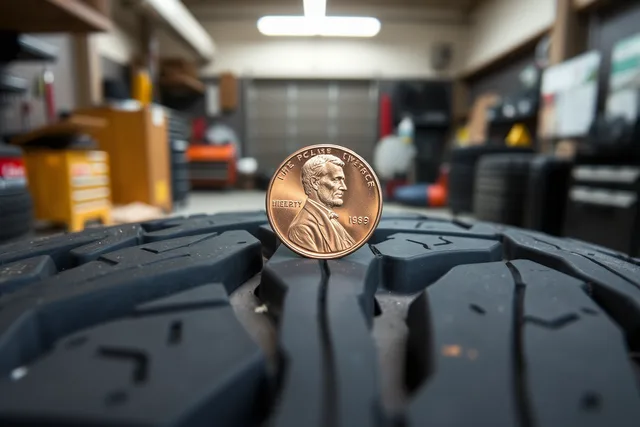
Two points customers mix up. Winter tires are not all-seasons: the compound stays flexible in cold, which is what holds grip on ice. And the legal minimum tread depth of 1.6 mm is a legal floor, not a winter standard; many owners replace at 4.8 mm.
Hand over a printed sheet rather than a spoken list:
- Winter tires required December 1 to March 15.
- All four wheels, not two.
- Legal minimum 1.6 mm tread; 4.8 mm is the practical winter figure.
- Exemptions exist; confirm on the SAAQ page.
- Seasonal storage is available here, priced per season.
Documents, appointments and the tax line
A newcomer may hold an international licence or one from another province. Neither blocks a tire sale: a licence is not required to buy service. Vehicle registration in Quebec is a separate obligation, and the customer's own timeline for it is set by the SAAQ.
Booking is where language breaks down fastest. Send reminders by text or email in French and English, and confirm a phone booking in writing the same day. If the customer is not comfortable online, take the slot by phone and read it back.
Quebec prices are posted before GST and QST, and newcomers from countries with tax-inclusive pricing read your board as the final number. Say the taxes are added at checkout before you write the estimate. For the rates and what they apply to, point the customer to Quebec tax information or Revenu Québec.
Keep a short list of settlement agencies by the counter. When a customer asks an immigration question, hand over the list rather than answering it.
Training and hiring for two languages
Test both languages in the interview, not on the resume. Ask the candidate to walk through a winter tire change in French, then in English, and watch which one they reach for under pressure.
Hiring is easier when you know the pool. Quebec City is largely francophone, and many applicants speak serviceable English. Our tire shop hiring guide covers where to post and what to screen for; add a language line to the same scorecard.
Ongoing practice beats a one-time course. Fifteen minutes of French conversation in the weekly meeting, plus a small bonus tied to a demonstrated level, keeps the counter covered through the October to December rush.
Quebec labour rules require a workplace free of discrimination, language included. Keep the policy written and applied the same way to every hire. The Quebec hiring rules page sets out the employer obligations; for anything specific to your situation, speak to a lawyer.
Where to send a customer with an immigration question
Your staff are not immigration advisers. The useful move is a signpost, not an answer. Keep the Quebec immigration website bookmarked on the counter tablet; it covers permanent residence, work permits and settlement services in one place.
For Quebec City specifically, the Centre multiethnique de Québec runs French classes and job help, and 211 Quebec connects callers to community services in both languages. Write both on the same card.
Licence exchange is the most common question and belongs to the SAAQ, not to you. Say so, and hand over the SAAQ contact rather than guessing at eligibility.
Newcomer communities talk to each other. A shop that answered one question cleanly gets named at the next gathering. Our tire shop customer acquisition article covers the rest of that funnel.
Common questions
Do I need to speak French to work at a tire shop in Quebec City?
Yes. The Charter of the French Language requires staff to be able to serve customers in French. A technician who is not fluent can work from a written script and hand off to a bilingual colleague for anything technical.
What are the winter tire rules for a customer new to Quebec?
Winter tires are required on Quebec-registered passenger vehicles from December 1 to March 15, on all four wheels, with a legal minimum tread depth of 1.6 mm. Exemptions are limited, so read the current SAAQ wording with the customer rather than summarizing it.
How do I make my signage compliant?
French must be markedly predominant. Where English appears on the same sign, the French text should be about twice the size. This covers storefront signs, interior posters, price lists and online advertising.
What should I do when a customer does not understand the winter tire rule?
Explain the two dates, show a tread depth gauge against their own tire, and hand over the printed checklist. Point them to the SAAQ page for the official wording and offer to book the change on the spot.